

There Was Once an Asylum

This site not only provides an overview of mental health history and its implications for Goodna, but also explores the complex relationship between memory and history.
We may never know some stories, but this site uncovers history, revealing the layers of understanding that underpin the present.
It is done in a way that honours the patients, clients, and the people.


Established in 1865, the Woogaroo Lunatic Asylum was Queensland's first public health institution, located on the banks of the Brisbane River near Goodna on Tuesday, January 10, 1865. A Border Police Station previously stood on the site, serving as a vital outpost protecting the interests of the growing community. Over the years, the surrounding landscape became home to many of the State's major institutional facilities, including prisons, an army barracks, and a migration hostel. On Tuesday, January 10, 1865, under the supervision of warder John, seven prison warders (two of whom were women) along with ten police constables escorted 57 male and 12 female patients. The two female warders supervised the female patients, who were moved from the Brisbane Gaol to the newly built asylum at Woogaroo. Since 1859, Queensland patients had no longer been sent to Sydney; they were instead lodged at the Brisbane Gaol. When the asylum was ready, patients were loaded into cabs and taken down to the Brisbane River, where they boarded a steamer named "Settler." They were conveyed down the Brisbane River to the landing point just before Woogaroo Creek. Embarkation was successfully managed, with 57 males and 12 females safely lodged in their new quarters. Patients were accommodated in a two-storey brick building, initially intended as the administration block. Male patients were housed on the first floor and part of the ground floor, while female patients occupied the remainder of the ground floor. A tall timber fence surrounded the building, and timber outbuildings accommodated a kitchen, bathroom, and staff areas. Dr Kersey Cannan was appointed as Superintendent, and a residence was constructed for him on-site, northeast of the main asylum buildings. Indigenous people were among the earliest inhabitants of the asylum, but not in significant numbers. Instead, immigrant settlers rapidly populated the institution from its earliest days, making up the majority of the colony’s growing population. At least 45 of the 57 males first brought to the new asylum were still there two years later, when an inquiry was held. Immigrants had come from many countries, contributing to the colonial population, particularly from Ireland, England, Germany, Scotland, and China. The first buildings included a male division, erected near the creek, and a female division, located farther up the hill. The superintendent's quarters stood between them. Because of recurring floods, additional buildings were erected farther up the hill, where the current complex stands today. Over the years, the complex has also comprised several public health institutions, several of which have now been decommissioned. Throughout its history, it has housed a diverse cohort of patients, including those with psychiatric illnesses, intellectual disabilities, acquired brain injuries, psychogeriatric conditions, neurological disorders, and substance use disorders. The site of the original asylum today serves as the Wolston Park golf club and course. The asylum has long been a dominant institution in the region and has recently undergone significant changes. Over the years, sections and services have been closed, and buildings have been handed over to other government departments and service organisations.
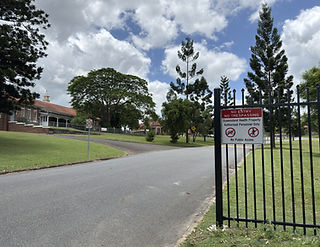

FOR YOUR SAFETY
If you intend to visit for a look, for your safety and that of others, please
DO NOT go past the black fence or the signs posted around the hospital boundary.
May the younger generation not only learn about its sad past but also the importance it plays in Queensland's History, dating back to the 1800s
“The only thing new in the world is the history you do not know.”
