

There Was Once an Asylum

This site not only provides an overview of mental health history and its implications for Goodna, but also explores the complex relationship between memory and history.
We may never know some stories, but this site uncovers history, revealing the layers of understanding that underpin the present.
It is done in a way that honours the patients, clients, and the people.


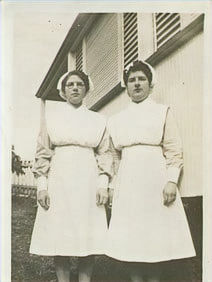
The many who cared for the patients


The patient's friend
The Patient’s Friend refers to a position held within Wolston Park Hospital, which represented the Office of the Patient’s Friend. The Office of the Patient’s Friend and associated position was established in 1977 to serve as an advocacy role for the individual rights of patients in their treatment plans and to provide protection from abuse and unnecessary controls.
The patient's friend - Psychologist Nadia Beer
Psychologist Nadia Beer was Australia's first patient advocate to work in a psychiatric hospital.
Nadia started at Wolston Park Hospital as a psychologist in the early 1970s and established the first 'Office of the Patient's Friend' within a psychiatric hospital in Australia. The "Office of the Patient's Friend" opened its doors in 1977 and was the first patient advocacy service to operate within an Australian psychiatric hospital. Part advocate, part whistleblower - running the service has taken a mighty amount of steel and a heart of gold. 30 years later. We have learnt that Nadia has since passed away.


The patient's friend: Dennis Manning
Dennis Manning started as a nurse in 1956 at age 18. He worked with Nadia Beer in the Office of the Patient's Friend for nearly 20 years. Dennis was also a union representative.
Many of his family members have since worked at Goodna.


Mr James Clifford, of Goodna
FIFTY-EIGHT YEARS IN QUEENSLAND.
ONE OF THE FIRST WARDERS AT THE WOOGAROO ASYLUM.
A RESIDENT OF GOODNA FOR 50 YEARS.
(By "Red Gum.").
It is 58 years since Mr James Clifford, a well-known resident of Goodna, arrived in Moreton Bay on the sailing ship Blenheim.
Mr Clifford was born in County Fermanagh, Ireland, and left in 1857 as a strong and vigorous young fellow.
His first employment, after reaching Queensland, was at Redbank, at the late Mr. "Tinker" Campbell's boiling-down establishment, Mr Clifford having been engaged on the punts plying between Redbank and Brisbane. He was in the service of Messrs. John Campbell and Son and another (the last-named having been the Capt. "Bobby" Towns, who had a steamer or two at this time running in the river trade between the metropolis and Ipswich) when they developed the coal mine at Redbank. Mr Clifford recollects the late Mr William Simpson, subsequently a Hotelkeeper at Redbank, supervising the colliery work. One of Mr Clifford's shipmates (the late Mr William J Reed, well known in Goodna) accepted an engagement as a blacksmith at the coal mine. During his trips to and from Brisbane, Mr Clifford became acquainted with the late Dr S. Simpson, of Wolston, who was a New South Wales Commissioner for the district (this was before separation), and who had at that time a dairy farm on Woogaroo Creek, the site of the Goodna Asylum for the Insane. Punts conveyed stone from Jeay's Quarry at Woogaroo, overlooking the Brisbane River, to the Brisbane Gaol, which was then being erected on the "Green Hills" (now Petrie Terrace), the late Messrs. Andrew Petrie and Sons having assisted in the building of the old "stone jug." During Mr Clifford's voyages on the Brisbane River, he frequently passed the steamers Bredalbane, Ballarat, the Hawk (on which he remembers seeing the veteran Capt. Geo. Holt, who afterwards conducted a bakery establishment in Bell-street Ipswich), the Brisbane, and a little vessel named the Premier. He mentioned the names of Captains. Geo. West, Rooney and Murphy. Among other things, he brought from Brisbane on Mr Campbell's punt were the slats now on the roof of the Palais Royal Hotel, the late Mr George Thorn, snr, having previously purchased them in the old country, for the purpose of covering his palatial private residence, then being erected on the corner of Brisbane and East Streets. While employed at Redbank, tidings came of the discovery of the Canoona gold diggings, Rockhampton way, to which he, along with many others, rushed, making the passage in the Yankee schooner Vanquish, which vessel took three weeks to get to its destination. The now-flourishing central city of Rockhampton was then a huge "canvas town," with between 15,000 and 25,000 people camped in tents on the banks of the Fitzroy River. Rich patches of gold were unearthed here and there, but the Canoona area was too small to support the thousands of prospectors who were on the scene. The field was a failure, and the diggers became very riotous indeed; the late Sir Maurice (then Col. Lo'Connell), with his force of native police, was called upon to quell the disturbances. Mr Clifford returned to Rockhampton, and he stated that he was a member of the first Customs crew established at "Rocky" by the New South Wales Government and that the "boss" of that service was the late Capt. Wm. Till, a noteworthy old Northern navigator. Tired of this life, Mr Clifford started on the "Wallaby," following many occupations, stopping at different stations just, as he said, " to earn the price of a pair of boots." His first place of call was at Messrs. Archer Brothers' station, Gracemere. Here he tried his hand at shearing; thence on to Port Curtis; afterwards to Mount Larkin, camping at this station in the hut in which the blacks had previously massacred a Mr Daniel Young, although Mr Clifford did not know of this dreadful occurrence at the time. The blacks were very troublesome in that part of the State, but he always managed to keep on good terms with the aborigines; at any rate, he trusted them no further than he could see them. Mr Clifford next wandered into Maryborough and from thence across to Gayndah. He worked for several months in the Burnett district. It was all paper money, I.O.Us, or cheques in those days, and at periods he had in his possession I.O.Us sufficient to fill a bucket. They were always honoured, however. Travelling by way of the Dawson, where he worked on the respective stations of the late Hon. Wm. Yaldwyn and the late Mr Pollett Cardew, and where he met the Fraser brothers, he subsequently reached "Myall Creek," now known as Dalby, thence on to " The Swamp" (Toowoomba). While here, Mr Clifford heard of the Tooloom diggings, near Warwick, but the gold having fizzled out, he made tracks towards Ipswich, calling in and working at both Gatton and Laidley, ultimately reaching Redbank, putting up at the residence of his sister (the late Mrs Thos. Doonan), delighted that he had had enough of bush life.
Obtaining employment in the Government road gang (with Mr Waine as overseer), he worked on the roads between Ipswich and Rosewood. He was employed at the One-Mile Bridge, the Three-Mile Bridge, and he states that the makings of the cutting approaching the Three-Mile Hotel (the proprietor of which was Mr. "Billy" Marks) must have cost at least "a guinea an inch." He was also employed in putting down the "corduroy" (logging) road at the Seven-Mile Creek. Accepting an engagement with the late Mr Thomas Green (a well-known Ipswich contractor), he assisted Mr Green in building the old Goodna Bridge for the coaching traffic. This was about the year 1864. Subsequently, he obtained employment from Messrs. Godfrey and Johnson, the contractors for the first Asylum brick wards, erected on the bank of Woogaroo Creek. "Previous to the roof being completed," said Mr Clifford, "the late Sir George Ferguson Bowen (the first Governor of Queensland), expressed a desire to inspect the then new asylum building. His wish was gratified, and he, the late Hon. Ratcliffe.
Pring and others climbed the ladder to the roof. After admiring the wild but pretty surroundings, the vice-regal party proceeded to descend, but, to their astonishment, they found that the ladder by which they had ascended was removed. "Realising the position of affairs, Sir George Bowen promptly responded to the hint," remarked Mr Clifford, "and advanced the wherewithal to thoroughly 'wet the roof.' And the vice-regal party reached terra firma amidst hearty cheers and much laughter." On the completion of these asylum wards, Mr Clifford joined the institution as a warder on the 10th of January 1865. Mr Clifford assisted, half a century past, in transferring the first batch of patients from the Brisbane Gaol (in which institution lunatics were previously confined) to the Woogaroo Asylum, to which his sister (the late Mrs Thos. Doonan) was the first chief nurse appointed. Before this, the gaoler and his wife acted as superintendent and matron respectively, and the clerk to the Brisbane Gaol acted as clerk to the gaol asylum. The first doctor in charge of the Woogaroo Asylum was the late Dr K. Cannan (grandfather of Lieut.-Col. J. H. Cannan, in command of the 15th Battalion of Infantry, at the Dardanelles). Mr Clifford says cricket was first introduced to the institution during Dr Cannan's regime, and he was among the first players. The matches were carried out in front of the old wards, on the site of the present kitchen garden. The Woogaroo Lunatic Asylum, now termed the Goodna Asylum for the Insane, has since grown to vast dimensions, and the methods adopted in the treatment of the inmates seem, remarked Mr Clifford, to be more on the hospital system than formerly. He joined the Government service in 1865 and retired on a small pension in 1896, having served over 30 years as a warder at the institution, during which he married.
He served under Dr K. Canaan, Dr H.Challinor, Dr Jaap, Dr P. Smith, and Dr R. B. Scholes (all since deceased). In addition to playing cricket at the institution, Mr Clifford engaged in other pastimes, such as stone and hammer throwing and jumping. He was a prominent athlete in the early days, competing at most of the St. Patrick's Day and Caledonian sports gatherings of years ago.
Mr Clifford made Goodna his home, and he is now enjoying the fruits of his industry while engaged at the Goodna Asylum. The halfway "village" between Ipswich and Brisbane, he has seen under all conditions. He can also call to mind when Redbank was a bustling centre during the early sixties and, as is the case today, preparing meat for export was the chief industry there. Redbank was also the principal coal centre, with the fuel raised there keeping the steamers and the metropolitan industrial places going.
He recalls that Mr Patrick Michael Hanrahan opened the Redbank Inn in 1864, and that the hotel and property were purchased the following year by the late Mr William Simpson. The old Redbank Inn was a landmark for nearly 42 years. Referring particularly to the late Mr John Campbell, the head of the firm of Messrs Campbell and Son, and another, Mr Clifford says he had
many conversations with him. He was called "Tinker" Campbell because he was a tinsmith in America or Nova Scotia. Mr Campbell came to Australia about 77 years ago. He settled for a period in the New England district, New South Wales, then crossed the border to Moreton Bay, now Queensland, where he engaged in squatting until he established the boiling-down works at Redbank, and also developed the coal industry at that centre.
Referring to Goodna, Mr Clifford styled Mr Charles Holmes "the father of the village," and then, in a conversational way, he stated that he recollected the parents of Mr Holmes keeping the Coach and Horses Hotel, on a site above the bridge which spans Woogaroo Creek, on the Brisbane Road. Mr Clifford also remembered when the late Mr Matthew Goggs purchased the late Dr Stephen Simpson's property at Wolston, where he subsequently resided. He mentioned the busy times of the coaching days, when Woogaroo was the halfway stopping place, and spoke of the late Mr William J. Reed as having been the first blacksmith to establish himself alongside the main coach road. He recalled that Mr J. Woods ran mail coaches, as did Mr John Nolan and Messrs. Cobb and Co., which brought to mind the opening of the Royal Mail Hotel by the late Mr John Drysdale. Years subsequently, his old shipmate, Mr W.J. Reed, the blacksmith, established the Prince of Wales Hotel. The late Mr Dan Macfarlane, the butcher, was referred to as a splendid stamp of a man and "a regular character"—good-natured, and generally well-liked. Mr Clifford admitted, however, that he had a poor memory and gave that as an excuse for not mentioning more names of old identities. Still, amongst other incidents, he remembered the animation during the construction of the railway line through Goodna, connecting Ipswich and Brisbane. "Goodna," said Mr Clifford, " has had two significant setbacks—the floods of 1890 and 1893, and we had a most anxious time during the '1893 floods at the Goodna Asylum, as all the lower wards were underwater, and nurses worked like a Trojan in looking after the inmates. We were practically cut off from the outside world for several days, the Goodna Asylum property being then surrounded by water."
In conclusion, Mr Clifford said that Goodna had expanded, the residents having built on higher ground, and with such fine backcountry as the Redbank Plains, he seems to think that Goodna's time is yet to come. Mr Clifford, who was for several years a publican in "the village", has always evinced a keen interest in the welfare of that centre, and St. Patrick's Roman Catholic Church there bears many marks of his generosity. In 1896, he presented the rich-toned bell that summons the adherents to their devotions. Subsequently, he gave magnificent gifts in the form of two stained-glass windows—one at the altar and one at the choir, both depicting scenes both artistic and devotional in beautiful colours. These were erected in memory of Mr Clifford's son, and bear the following inscription: -
'To the glory of God and in loving memory of John Edward Clifford, born 29th December 1875, died 20th February 1902, aged 26 years.
Eternal rest give unto him, 0 Lord."
Mr Clifford, who has one son alive, Mr James Clifford, jnr, of Wynnum, is still hale and hearty and is living in retirement, his residence commanding a lovely view of Goodna and its surroundings.

The Prince of Wales Hotel on Brisbane Terrace, Goodna, was established in 1865 by William James Reed. He first applied for a Publican license in August 1865, stating that the house consisted of 3 sitting rooms, five bedrooms, and family living quarters. Over the years, the hotel hosted land auctions, lodge meetings, and magisterial inquiries. In 1873/7, 4 Ann Thomas, William Reed's sister-in-law, held the license, and he reapplied to become the licensee in 1875. In 1878, he was declared insolvent, and Mr Clifford, a Warder at the Woogaroo Asylum, became the owner and leased the hotel to Mr McNamara. The hotel subsequently burned down in January 1880.

Dr John Waller
His medical career took him to many facilities before his retirement in 1997, Wolston Park Hospital (1970–74) being one of them.
Dr John Waller gave Mater 19 years of dedicated service, serving as Medical Superintendent of Mater Adult Hospital from July 1978 to July 1995, when he was appointed Executive Director of the hospital, a role he held until his retirement in July 1997.
Having graduated from The University of Queensland in 1956, he began his medical career as a resident at Royal Brisbane Hospital, before further developing his career with medical and administrator roles at Thursday Island Hospital (1958–59); Dalby Hospital (Medical Superintendent, 1960–62); Brisbane Chest Clinic (1962–66); Wolston Park Hospital (1970–74); Royal Brisbane Hospital (1975–76) and Princess Margaret Hospital for Children, Perth (Deputy Medical Superintendent, 1976–78). Dr Waller commenced as Medical Superintendent of Mater Adult Hospital on 3 July 1978. His numerous achievements included overseeing the planning and relocation of Mater Public Hospital to Mater Adult Hospital (now Mater Hospital Brisbane) in 1982. In later years, he led the hospital through change and advancement amid budgetary constraints. His able stewardship led to his appointment as Executive Director of Mater Adult Hospital in July 1995. Throughout his tenure at Mater, Dr Waller was highly regarded for his compassion for patients and staff.
Dr Waller excelled in many areas of his profession, including serving as State President of the Royal Australian College of Medical Administrators, President of the Queensland branch of the Australian Medical Association, and rising to Lieutenant Colonel in the Army Reserve. In the 1997 Australia Day Honours List, Dr Waller was appointed a Member of the Order of Australia (AM) for his services to medicine and medical administration.
Dr Waller officially retired from Mater on 6 July 1997.
Kevie Halls
Kevie is a long-time resident of Gailes, a former Wolston Park Hospital Nurse, and a noted photographer and historian of Goodna, Gailes, and the surrounding districts.
He was also a former Vice President of the Goodna District Rugby League Football Club Old Boys and a good contributor to those in need in our community.


